St Wenn is a small farming parish in mid-Cornwall to the west of Bodmin. Off the tourist maps, it can be easily overlooked. In 1861 in its small churchtown we would have found Mary Ann Hobbah, described as the wife of a schoolmaster. It’s not clear where her husband John was at the time, although in 1851 when the family was living in neighbouring Withiel he was a shoemaker, suggesting a self-taught man who ran a private school. John and Mary had a son – John Trelawney Hobbah – who went on to have an interesting career. By 1871 John Trelawney had become a teacher like his father but, more unusually, he was teaching deaf and dumb children at the West of England Institution for the Deaf and Dumb in Exeter.
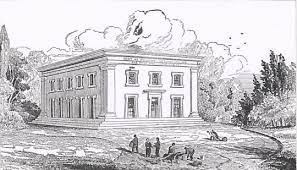
Special education for disabled children began to emerge at the end of the 1700s, the first schools for the blind appearing in the 1790s. It was a slower progress for the deaf. Nonetheless, in 1826 the West of England Institution for the Deaf and Dumb was founded and a building leased in Exeter in the following year. This took children from seven to 12 years of age on the recommendation of subscribers (as did voluntary hospitals). From 1863 Poor Law authorities had permission to send deaf and dumb children, previously housed in workhouses, to the school. In the 1890s legislation finally made education for deaf and blind children compulsory and regulated by the state.
John Hobbah was obviously good at his job and by 1881 he looks to have been the senior teacher at the school with his wife Jessie from Exeter acting as matron. There were two assistant teachers, one of whom was himself dead and dumb, to help teach the 43 boarders. Some vocational training would have been provided – printing, tailoring, cabinet making, wood engraving or shoemaking for the boys and the less varied sewing and dressmaking for the girls.
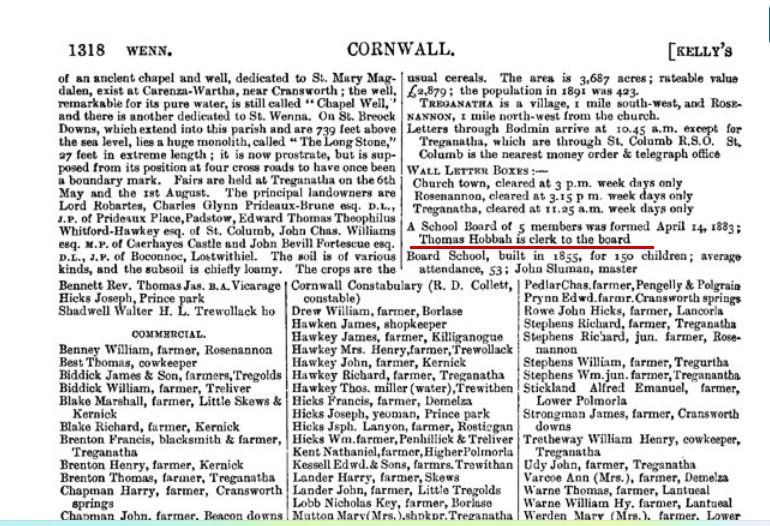
Between 1882 and 1887 John and Jessie left the Institution and were back at St Wenn. John was recorded in 1881 as keeping a temperance hotel. Temperance hotels had spread after the 1830s with the growth of the temperance movement in the UK, providing an alternative to licensed premises for a rising number of non-drinkers. It’s not clear where John’s temperance hotel would have been. St Wenn wouldn’t appear to be the ideal location.
In any case, it didn’t last. John, Jessie and at least two of their four children emigrated to Canada where John was recorded as a farmer in Nova Scotia in 1901.
 Cornish studies resources