In 1961, the population of the market town of Bodmin was just over 6,000. The previous half-century had only seen a small increase of less than 1,000 on its 1901 population of 5,300. Nonetheless, it was larger than its east Cornish rivals at Launceston and Liskeard. But this was not enough. Local politicians were seduced by a tempting offer from the Greater London Council, newly formed in 1965, to ease its housing problems by an ‘overspill’ of population, together with the industry to employ them, decanted to various Cornish towns. While Liskeard and Camborne-Redruth rejected these overtures Bodmin’s leaders accepted them.
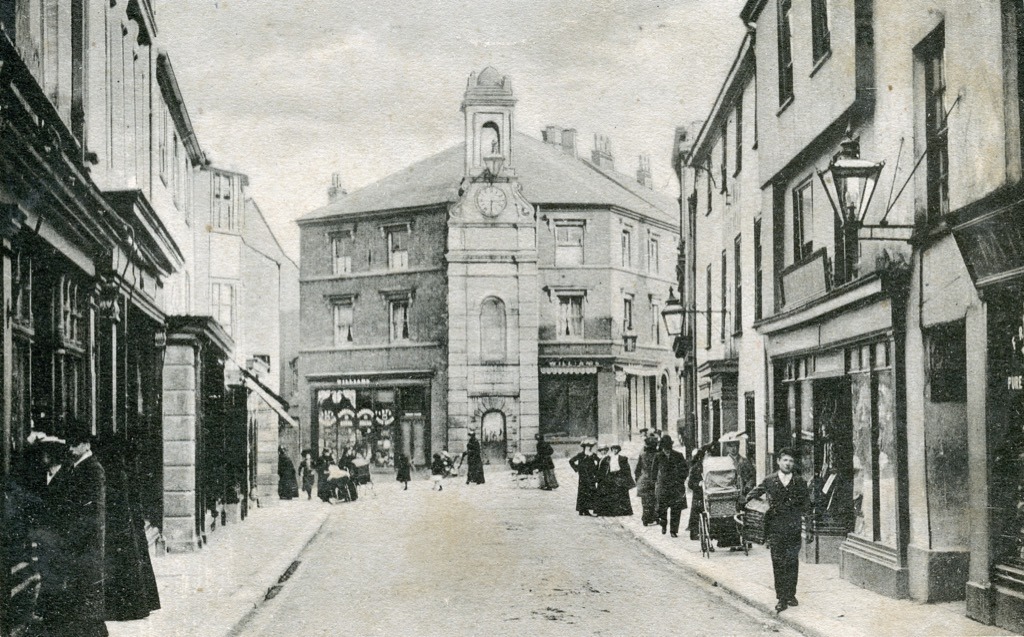
Bodmin’s population is now almost three times larger, at 17,000. The original city-dwellers adapting to life in a somewhat sleepy town have long been overwhelmed by a more general migration mainly from south-east England, while many of the factory jobs that came with them disappeared years ago. Moreover, there is little sign of an end to Bodmin’s growth. Land for another 4,600 houses is either currently allocated or has planning permission. They will add another 10,000 or so to Bodmin’s population within the next generation.

In the second half of the nineteenth century migration was mainly in the opposite direction. The migration pattern of the children in the Victorian Lives database who were born in Bodmin Registration District (RD) was predictable given what we have already encountered in east Cornwall. This mainly non-industrial RD with a small mining sector had fewer migrants than either Liskeard RD or the far north.
As befits an agricultural RD, the proportion of those traced was much higher than in the mining districts, 86% for both sexes. The pattern of migration for girls was very similar to that for Liskeard, the difference being well within the margin of error.

Yet the pattern for boys was very different. A far higher number (60%) were still resident in Bodmin RD in their 30s, while fewer had left for England or for overseas. While boys from Bodmin RD were far less likely to emigrate than boys from Liskeard, girls were a little more likely to choose to go to Devon, even though the distance was greater. Overall, unlike Liskeard there was much less difference between the genders.

 Cornish studies resources
_13.jpg)