In the early 1800s St Austell differed little from the other small market towns typical of east Cornwall. Its fortunes were however about to be transformed by the expansion of copper mines to its east and then clay works in the hills to the north. Nonetheless, the population of the urban district of St Austell remained smaller than the farming centres of Bodmin, Liskeard and Launceston even as late as the Edwardian years (1901-1914).
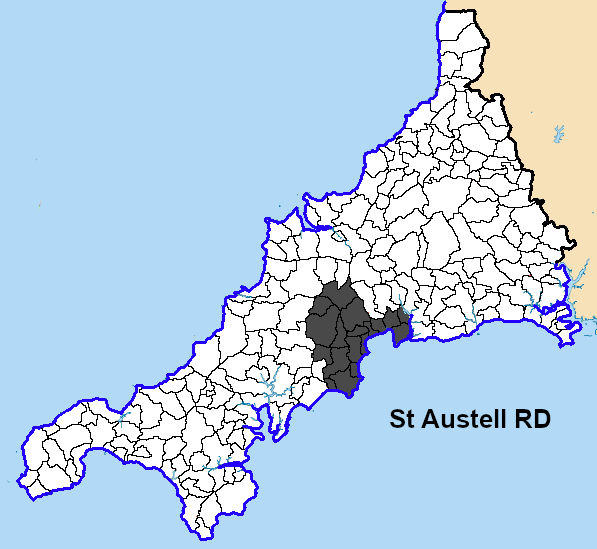
Although it was the twentieth century that saw St Austell grow to become one of Cornwall’s largest urban areas, only clearly outnumbered by the old central mining district of Camborne–Redruth, the spectacular rise of the clay works on Hensbarrow Downs might have been expected to have offered more job opportunities for the children born in the district around 1850. Were St Austell children more likely to stick around, finding work in the burgeoning clay industry and its suppliers?
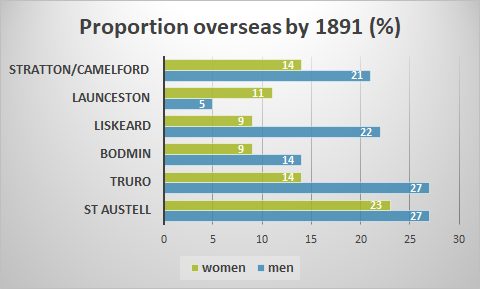
The answer is clearly no. The St Austell children were actually more likely to emigrate than their contemporaries in Liskeard or North Cornwall. In fact, the proportion of men leaving St Austell RD for overseas destinations was as high as it was in Truro, Helston and Penzance RDs.
For women, the proportion emigrating was higher than other places. Indeed, girls born in the St Austell RD were more likely to emigrate than from any other RD in Cornwall. Any opportunities in the clay industry were, before the twentieth century, more than cancelled out by the declining prospects of those staying in the mining parishes of St Blazey and Tywardreath, where a succession of mines closed after the 1860s.
 Cornish studies resources