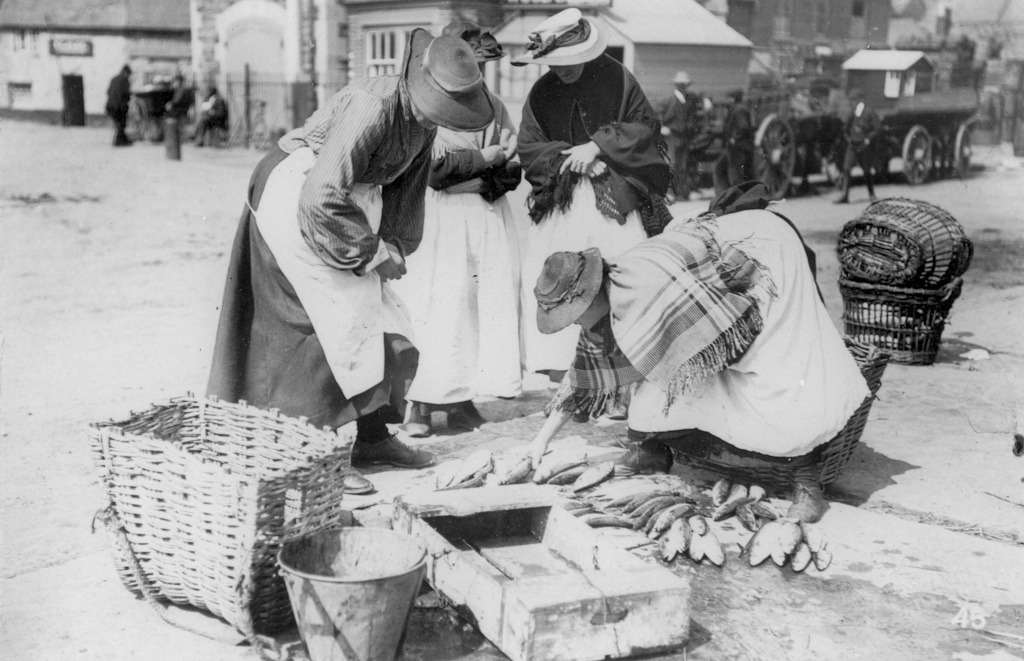
Just over one in 20 men and women in the Cornwall of the 1860s was recorded in the census as a shopkeeper, merchant or trader of some sort. These ranged from the humble itinerant hawkers peddling their trinkets from parish to parish, through innkeepers, grocers, drapers and other shopkeepers to merchants buying and selling a wide range of goods. Moreover, it was not unusual for men to combine retailing with other activities, especially mining, although the census’s focus on the individual no doubt disguises the more meaningful economic unit of the household. Wives and daughters may well have been tending the shop or the kiddly while the old man was down the mine.
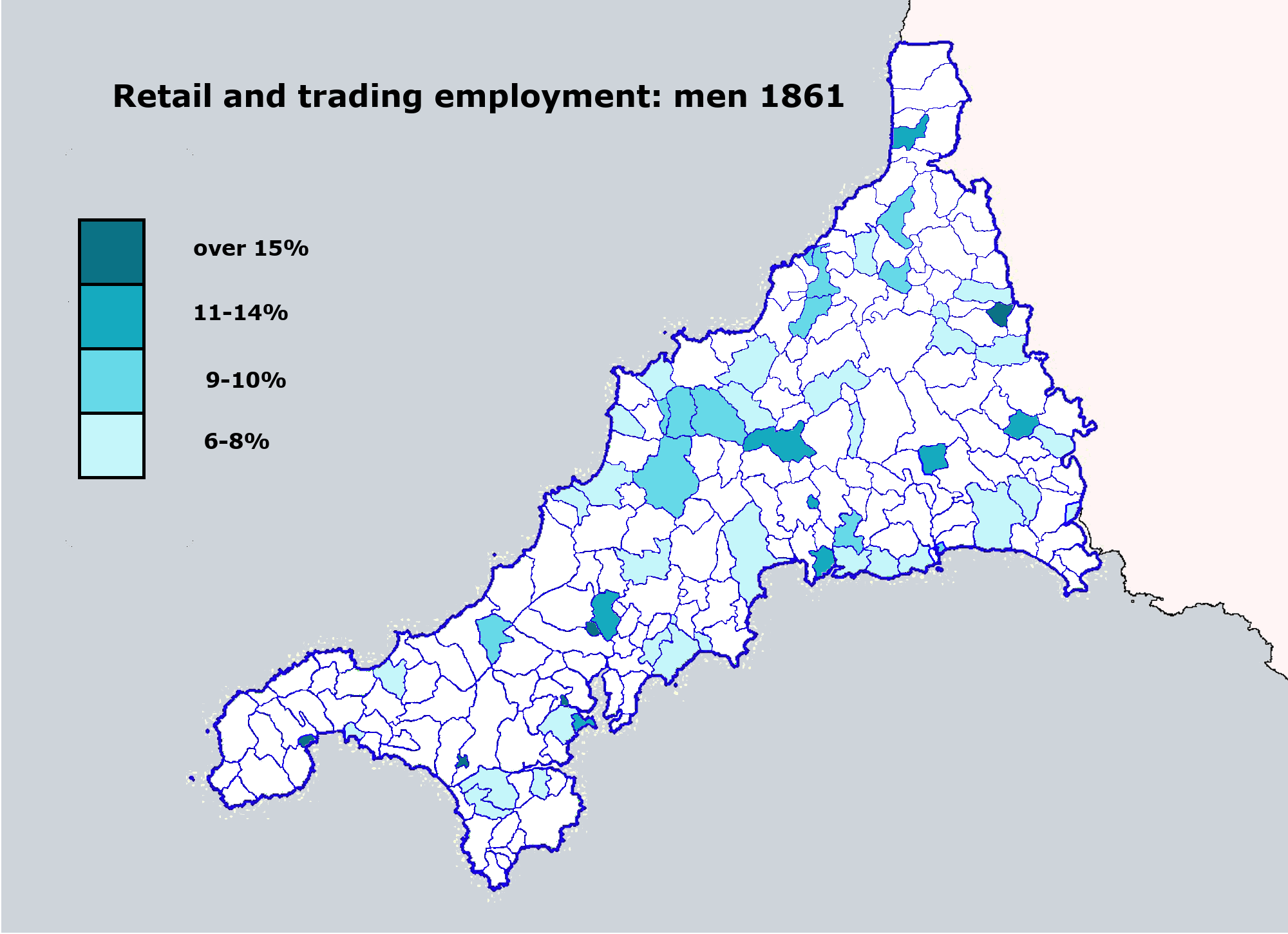
Unsurprisingly, the geography of retailing and trade reflected the degree of urbanism, particularly for men. However, for both men and women the parishes where retailing was present in the highest numbers in the occupational structure were urban. Truro easily topped the list for men (although interestingly not for women) with about a quarter of men there selling something – or over four times the Cornish average.
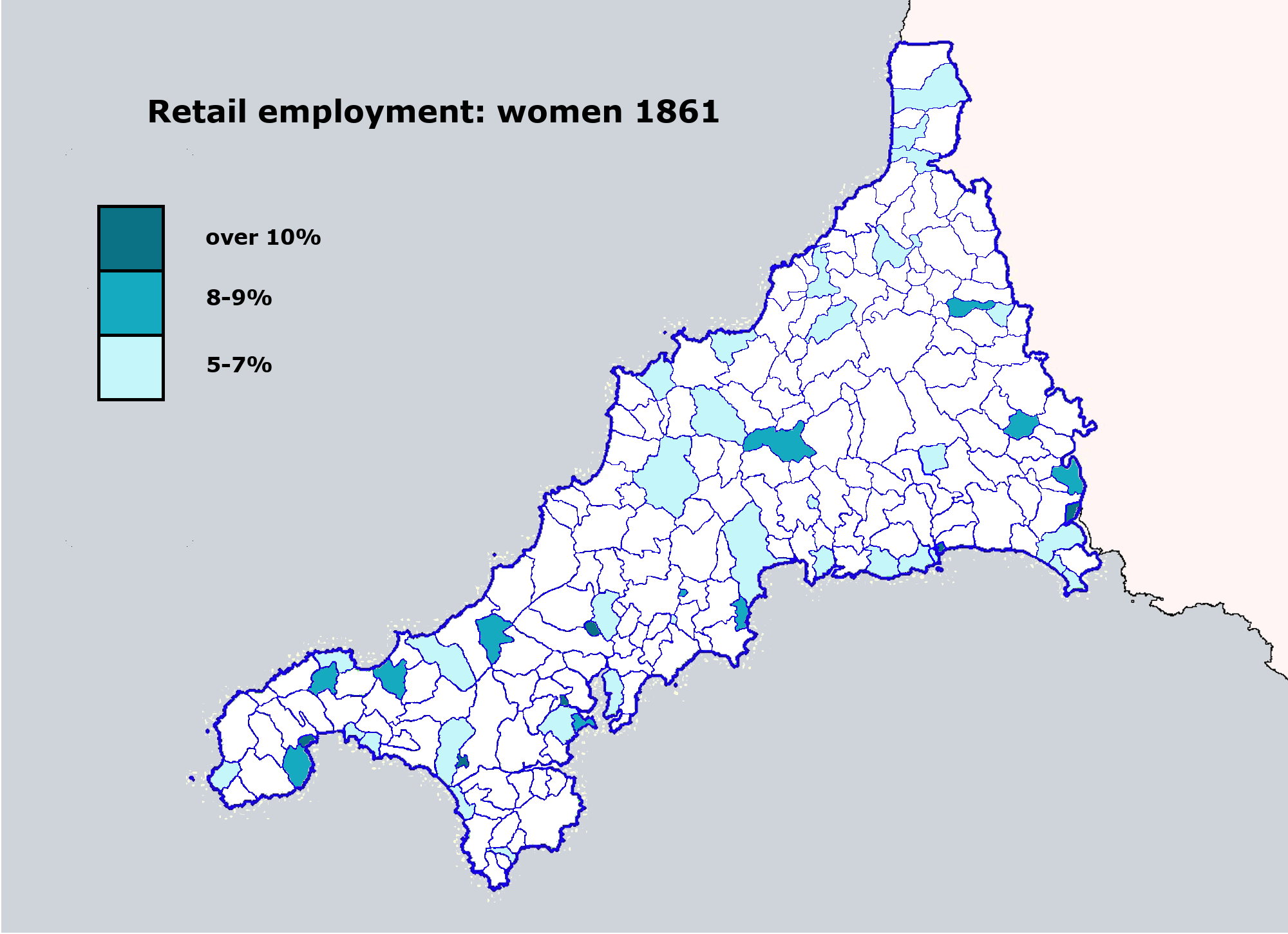
Truro was thus already Cornwall’s main shopping and service centre. Its main competitors, based on numbers engaged in the retail sector, were Penzance, Launceston, Penryn and Helston. The last three of these had been among Cornwall’s medieval market towns, indicating some continuity from the middle ages, overlain by the effects of eighteenth century industrialization. It was this industrialization that had helped Redruth to become the market centre for the Central Mining District, something visible from the maps. Nevertheless, shopkeeping and trading there never reached the relative importance it did in the older market towns plus Falmouth and Penzance.
If you have found the material on this site of use then you may be interested in my recent books published under the Coserg imprint. For a list see here.


Yes there is a always a problem with the census recording the main occupation, misses out all of those who had a number of jobs in different sectors.
LikeLike