James Harris, ‘Repeated testimonies of duty and affection’: Constructing loyalty in Cornwall and South-West Wales, 1681-1685’ in M. Ward and M. Hefferan (eds.), Loyalty to the Monarchy in Late Medieval and Early Modern Britain, c.1400–1688, Macmillan, London, 2020, pp.273-95
Nowadays, governments have access to sophisticated media campaigns of mis- and disinformation to maintain their legitimacy. But the use of propaganda to construct consent and loyalty to the state is nothing new.
The years between the civil wars of the 1640s and the arrival of John Wesley in the 1740s are a bit of a black hole in Cornish history. After the turmoil of the wars and their aftermath Cornwall is viewed as lying dormant, oozing loyalty to the Stuart monarchy restored in1660. So loyal to their cause in fact that later Cornish revivalists such as Henry Jenner were keen to claim widespread support in Cornwall for the Jacobite rising in 1715.
In this book chapter, James Harris sheds some light on this period, questioning the extent of loyalty and its character. He argues that ‘far from monocultures, both [Cornwall and south-west Wales] were the site of multifaceted political opinions and partisan conflict’. Loyalty to the Stuarts was not innate but was actively worked for by means of what he calls a ‘Tory propaganda campaign’ led by Cornwall’s leading landed families.
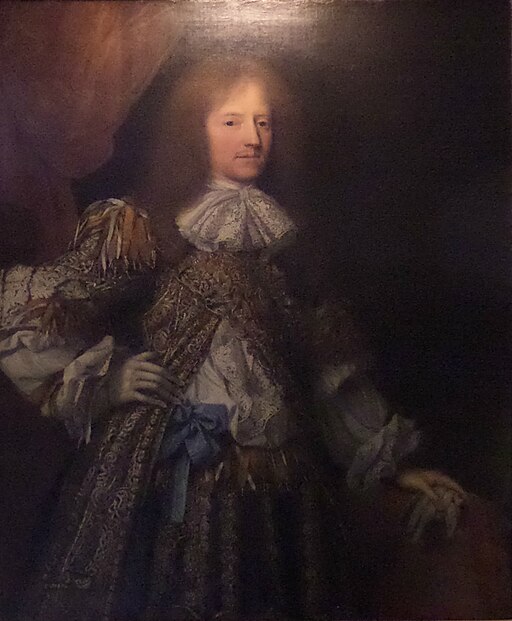
This was achieved through a campaign of loyal addresses which were directed towards King Charles II after his declaration of 1681 justifying his dissolution of Parliament and direct rule without it. Cornwall’s affection for Charles I in the civil wars of the seventeenth century and support for the royalist cause was a genuine source of pride for many of its local leaders in the 1680s. However, they set out to generalise this and build an image of a unanimously loyal region. This was done by encouraging a string of loyal addresses which were then presented to the government by Tory landlords, orchestrated by the Lord Lieutenant – Sir John Granville, the Earl of Bath – son of the Royalist hero Sir Bevil Grenville.
Harris proposes that the language of loyalism was being used to veil a less uniform local political culture. This is suggested by a more pragmatic use of the loyal addresses. For they also served as a convenient way for the government to identify its supporters and opponents in the Cornish boroughs. The second part of the chapter therefore turns from the addresses to Charles II’s purge of the borough corporations in 1682-85. This was achieved by threatening the corporations with writs that could lead to the loss of their borough status. To avoid this, corporations sometimes voluntarily surrendered their charters on the promise of a favourable regrant. In 1684 15 Cornish boroughs joined together to surrender their charters for regranting. Inevitably the new charters contained a clause allowing the monarch to remove any corporation member at any time. Such a power was important as the nomination of many MPs rested at this time in the hands of the borough corporations and their freemen.
Surrendering a charter for regrant became a demonstration of political loyalty. But, although the mass surrender of Cornish charters was portrayed as spontaneous, there was pressure from the Lord Lieutenant to do so and a degree of reluctance and self-preservation on the part of the boroughs in the face of the government’s legal threats. Predictably, the new charters cemented the Tory ascendancy by rewarding those local men who had worked to support the earlier loyal address campaign and exclude potential opponents. Harris supplies a convincing case that the two campaigns of the 1680s were critical in helping to forge an image of unanimous loyalty and bolster the Anglican church in Cornwall. They also allowed the government to identify reliable local supporters and install them in the corporations. However, this hid the presence of oppositional voices and underplayed the variety of local opinion.
It would be interesting to hear more about that opposition. In this chapter the nature of the ‘multifaceted political opinions’ remains somewhat underdrawn. Only one Cornish borough refused to surrender its charter – the small seignorial borough of Newport, between Launceston and St Stephens. Moreover, although a third of Cornwall’s MPs voted for the unsuccessful bill that aimed to exclude the Catholic James II from accessing the throne, an impressive number of signatures were appended to the loyal addresses. There were 121 from the tiny borough of Bossiney alone and a ’dubious’ 10,000 claimed for a loyal address from the ‘Tinners of Cornwall’. Were these signatures all a result of intimidation and threat? If not, what proportion shared the loyalism of Cornwall’s leading Tory families? James Harris concludes that the loyalist campaign ‘embedded’ an image of unanimous loyalism ‘in popular consciousness’. Doesn’t this imply that by the 1690s their campaign had succeeded and the loyalism of the elite had been internalised by a considerable proportion of the general population? Or were most people then as now just ‘don’t knows’ rather than dupes?
 Cornish studies resources
