Joan Passey, Cornish Gothic, 1830-1913, University of Wales Press, 2023
After waiting, or not, for years for a book on the Cornish Gothic, Kryzwinska and Heholt’s innovative work, published in 2022, has been followed a year later by yet another book on the same topic.
Joan Passey’s approach will be familiar to anyone who has read the earlier work, although she doesn’t cite it. We’re informed that the Gothic is all about liminality, questioning boundaries, disrupting oppositions and the tension between co-existing contradictions. The Gothic critic is both attracted by the object of their desire and yet simultaneously repulsed by it. Like Kryzwinska and Heholt, Passey sets out to rescue the Cornish Gothic from its marginalisation and restore it to its proper place in the academic pantheon.
Cornish Gothic neatly complements Kryzwinska and Heholt’s earlier text by concentrating on the nineteenth rather than the twentieth century. A very wide range of little-known and largely obscure Gothic literature on Cornwall is well summarised in sometimes excruciating detail together with some interesting vignettes. Had it stopped there this book would be a useful addition to our knowledge of Victorian writing on Cornwall.
Yet, Passey argues that the Gothic was not confined to novels. It was encountered in travelogues, tourism publications, Arthuriana, folklore collections and even on railway platforms. In short, it was everywhere. Of course, being everywhere could also mean it was nowhere, perpetually teetering on the brink of collapse into a crevasse of conceptual confusion. Passey admits that Cornwall in Gothic fiction is ‘triply evasive, slippery and difficult to define’ (p.13). But why stop there? The Gothic genre more generally is itself hyper-slippery as imagination merges into reality, fiction and fact happily embrace and the observer transmutes into the thing being observed.
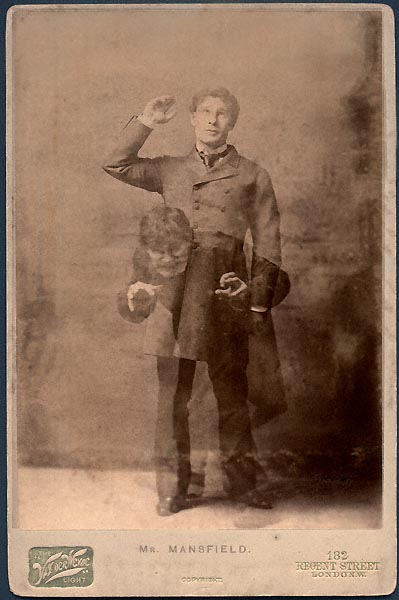
Moreover, if Krzywinska and Heholt’s Gothic Kernow was the Cornish Gothic’s Dr Jekyll, here we meet its Ms Hyde, seething with anger and poised to wreak havoc. Although seduced by Cornwall, Ms Hyde is nonetheless repulsed by Cornish Studies. Cornish Studies is merely ‘academic isolationism’ divorced from the ‘larger national context’ (p.4), a ‘broader understanding’ (p.20) or a ‘larger national context’ (p.34). In consequence, Cornwall has been ignored not because the centre refuses to respect the historical status of a peripheral nation but because the ‘county’ has been ‘relegated’ to a parochial Cornish Studies, no different from a pathetic ‘local studies’. Therefore, in order to save Cornwall, it must first be saved from evil Cornish Studies.
Joan Passey claims to relocate not just the Cornish Gothic but Cornwall itself in a ‘more nuanced’ and ‘broader national cultural and literary framework’ (p.4) in order to ‘build a fuller historical picture of what made Cornwall different’ (p.20). Cornwall will be liberated from the parochialists of Cornish history and welcomed into the ‘broader’ fields of literary studies, Gothic studies and Victorian Studies. Let’s ignore the fact that Area Studies, of which Cornish Studies is an example, has a long and distinguished academic pedigree, much longer in fact than Gothic Studies.
It’s fair to say that, in its Ms Hyde persona, the Cornish Gothic has more than a slight problem with Cornish particularism. Particularism, which is inevitably bracketed here with isolationism and insularity, creates more than a little uneasiness and anxiety, insecurity and irritation. We are told that ‘the county’s … inexplicable ancientness’ is accompanied by ‘an emphasis on its own significant and superior history as central to Cornish identity’ (p.191). Unnerved by this, she suspects that particularism in the main was a device imposed externally on a passive and innocent subject.
Alarmed by a fear of the return of the repressed in the shape of an incipient nativist critique of the Cornish Gothic, Passey mounts a vigorous attack on Cornish Studies. However, rather amusingly, in her eagerness to quell this demonic influence she seems blind to the epistemological issues it poses for her stance. For the Gothic, or so we are assured, is all about fluidity, uncertainty and challenging boundaries. Yet here we find a good old-fashioned binary – Cornish Studies bad/Gothic Studies good. We are informed elsewhere that the Gothic’s attitude to the regional novel shatters and disrupts simplistic notions of the ‘universal or central’ as well as the parochial.1 The essentialist view of ‘parochial’ and ‘isolationist’ as opposed to ‘wider’ and broader’ that we meet in Cornish Gothic, 1830-1913 hardly squares with the indeterminacy lauded in other contexts.
The author remains blithely unconcerned that the fixed binary repeatedly encountered here undermines a central leg of her own conceptual framework. This is just one facet of a stunning lack of self-reflexivity in this text. The numerous references to ‘broader’ approaches or a ‘wider’ nation are revealing. In this instance the contrast with Krzywinska and Heholt’s approach is stark. Krzywinska and Heholt are explicit about their assumptions; Passey is not. The uncritical application of the word ‘county’ to Cornwall (in Cornish Gothic the word appears 176 times in 195 pages of text in contrast to the mere three times in the 77 pages of Krzywinska and Heholt’s Gothic Kernow) is unwitting testimony to the taken-for-granted assumptions that lie behind this text.
Assuming Cornwall’s county status and asserting the superiority of English academia tell us all we need to know. This version of the Cornish Gothic is all about re-asserting the subordination of the regional and re-imposing the right of the centre to comment on and comprehend the periphery.2 The Cornish Gothic in its Ms Hyde guise turns out to be nothing more than the all too familiar colonialist gaze. Underneath a veneer of the new, we meet the familiar old modernist arrogance.
Particularism is particularly unsettling for the colonialist gaze. That helps to explain the confusion around the topic and the uneasiness with it in this book. As an obvious ‘county’, a part of the ‘broader’, ‘wider’ and altogether much grander nation of England, claims to particularism are at best questionable, at worst a sham, but always irritating and best suppressed. Even work in Cornish Studies has to be de-fanged. Particularism must be reserved for the much safer hands of the centralist academic who can tell us what to think.
 Cornish studies resources
