By the end of the fifteenth century the Arundell family of Lanherne at St Mawgan had climbed to the top of Cornwall’s pecking order. Yet, by the 1600s the family was declining fast. The reason was simple enough. Their stubborn commitment to Roman Catholicism after the Reformation of the 1540s made them suspect in the eyes of the Government. But the details of their fall can be confusing, not least because in the 1500s four heads of the family in a row were all called John.
The Arundells first emerged in the early 1200s, holding a single manor at Treloy, near present-day Newquay. Their rise came over the following two centuries, mainly as a result of a succession of lucrative marriages which added a score or so manors to their estate. During these years, the family seat was transferred from Treloy, via Trembleath in St Ervan to Lanherne, where the family was based by the 1370s.
The Arundells were Lancastrian supporters in the 1400s and remained loyal to Henry VII during the Cornish risings of 1497, being rewarded with yet another manor. By 1501 John Arundell was the wealthiest man in Cornwall and as receiver-general of the Duchy when Henry VIII became king, the most important as well.

Sir John Arundell #1 (1475-1545) was content to administer the Duchy and remain in Cornwall. His eldest son Sir John #2 determined to keep his head down as his fellow landowners embraced Protestantism. Meanwhile, the Arundells clung to their traditional faith. The rising of 1549 brought the first problems, when Sir John failed to answer a call to serve against the ‘rebels’, who were led by his cousin. He was kept in custody in London and examined, pleading sickness had prevented his attendance. This didn’t wash and John was confined to the Tower from 1550 to 1552, before dying in 1557.
Nonetheless, the family’s position was restored during the reign of Queen Mary (1553-58). Sir John #3 retained a powerful position in Cornish society as late as 1570. As A.L.Rowse wrote, in what is still the best account of these years, the Arundells ‘gave as little offence as possible’, although they were ‘aloof (and) increasingly isolated from the rest of (Cornwall)’.
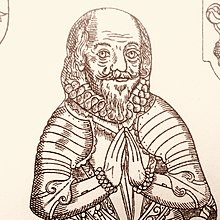
The breach finally occurred in 1577 when Cuthbert Mayne, a Roman Catholic missionary priest, was discovered at Golden, the house of Francis Tregian, another Catholic who had married an Arundell. Mayne was executed and Tregian imprisoned. John Arundell #3 was indicted for not attending church and restricted to London, spending periods of time in the Tower. His final stay there came with the Anglo-Spanish crisis of 1587 and the Armada invasion scare. He died shortly after.
It wasn’t the extended period away from Cornwall after 1577 or spells in prison that proved the final straw for the family but the financial pressures for being declared ‘recusants’, or non-attenders of the Church of England. John Arundell #4 was paying a fine of £260 a year by 1599 and the Crown had confiscated some of the family lands under a law of 1586.
Although John #4 was allowed to return to Cornwall in 1604, the family’s continuing refusal to recant and give up their Catholicism ate away at their wealth. The last male Arundell, another Sir John, died in1701, although the family line continued via marriage into a (by now much wealthier) cadet line of the Arundell family in Wiltshire. In the late 1700s most of the Cornish lands were sold and in 1794 Lanherne itself was given to Carmelite nuns fleeing the Low Countries. It remains a nunnery, offering few hints of its former status as the power-base of Cornwall’s leading family.
See the comments below for some very useful additions to this blog provided by others.

 Cornish studies resources
An amazing account. It’s very hard these days to understand how passionate belief can trump earthly wealth and status.
LikeLike
John and Eleanor (Elizabeth) are my 15th great grandparents. I’ve been learning a lot about my heritage… Thought inspiring!
LikeLike
I have Rowse’s Sir Richard Grenville (1st ed.) unread on my bookshelf and you have prompted me to dip into it. You mention his account of those times being the best but you don’t give a reference to which of his many writings.
LikeLike
I was thinking of his classic Tudor Cornwall
LikeLike
A branch of the Arundell family eventually settled at Truthall Manor, though I’m not entirely certain about their earliest ancestors. I believe they arrived there via the Arundells of Tolverne. Lyson and Drew in the Magna Britania say “The first
Arundell of Truthall was Captain John Arundell, (son of Thomas, 1671) an active royalist in the reign of Charles I., who, after the Reformation, was made duputy-governor of Pendennis caftle.
As they established themselves at Truthall, their descendants were often identified by their first names followed by “Trithwall” or “Truthall,” which I understand was a common practice using the name of one’s manor as a personal identifier. Over time, however, the family surname appears to shift to “Thomas” and i wonder of the “son of Thomas” in the Parish church, is why everyone in the line was then called Thomas. There are some family stories of notable ancestors within the Thomas side of my family (who never left cornwall), and I found Truthall from the Thomas’s up.
I’ve wondered whether this was a natural evolution of the name or perhaps a deliberate change, possibly to distance themselves from a disgraced ancestor, such as one executed for treason, or from the Arundell who reportedly squandered his fortune pursuing the legendary island of Hy-Brasil. However, perhaps more likely just to identify who the father was of John who was the first Arundell at Truthall, But the fluidity there interested me.
LikeLike
Rowse’s work on Grenville is really interesting – far from emerging as a heroic adventurer, Grenville comes across as seriously disturbed and with a really vengeful attitude to the Arundells and other Catholics.
LikeLike
The Arundells were also involved with the Chideock Martyrs. They owned Chideock Castle which became a refuge for Catholic priests and where loyal Catholic villagers could go to mass. When the castle was destroyed the villagers worshipped in secret in the loft of an old barn. This secret chapel has been restored and is open to visitors. Well worth a look!
LikeLike
Dorothy Arundell is interesting in this regard. She was the third Sir John’s eldest daughter, and a very feisty, headstrong individual who was something of a soul-mate to the Jesuit priest, John Cornelius. Her writings are extant and have been published.
LikeLike
Great blog you haave
LikeLike
I have been directed to Arundell by MyHeritage and a user. 25% of my ancestry is in Cornwall (Bawden, May, Saxbie and others) and feel a much deeper connection now. Would love to explore more but 17,000km distance makes it hard. Any offers?!?
LikeLike
Is there any known information about Humphrey Arundell (1538 – ), third son of Sir John Arundell of Lanherne (1500 – 1557)? There is a suggestion that he moved to Darfield, Yorks, and married a Maud Lovell Stafford and had a son called Homfrey Arundell and married Anne Beaumond.
LikeLike
They are direct ancestors of mine through my father’s paternal grandmother, Emily Pitts. Although I am not a religious person I find myself really siding with the Recusents, (for all I was raised very Evangelical) I have the family rebellious streak and have always wanted to stand by what i believe in far greater than money or status.
LikeLike