In 2021 79,941 of Cornwall’s residents went to the trouble of writing ‘Cornish’ in their response to the census question on national identity. Another 9,031 wrote ‘Cornish’ while also checking the tick-box for ‘British’. Together these accounted for 15.6% of residents. This was an increase of about 16,000 on the 13.8% who declared a Cornish only or Cornish identity in combination with another identity in the previous census in 2011. (Unfortunately, the data from the two censuses do not allow for an exact comparison. Changes in the way the ONS present the data mean that the 2021 census underestimates the number writing ‘Cornish’. Up to another 8,000 residents in 2021 will have written ‘Cornish’ in addition to ‘English’ or other identities.)
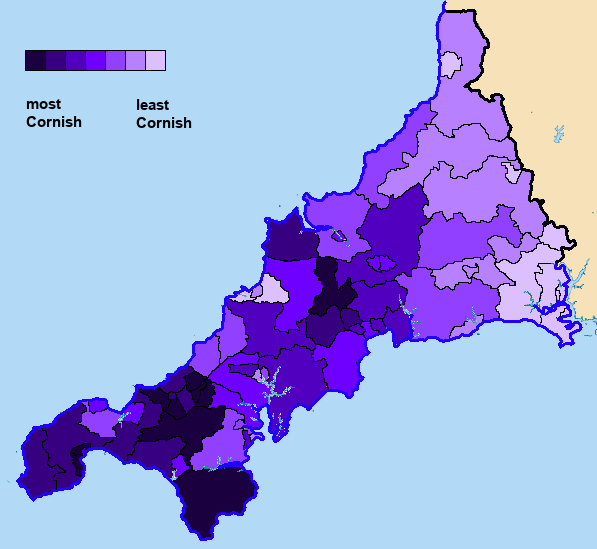
Within Cornwall the broad west to east gradient in Cornishness seen in 2011 persists. Districts in the west at Penzance, around Camborne-Redruth and the Lizard, plus parts of the clay country, include the highest number of self-declaring Cornish. Areas bordering the Tamar in the east had the lowest proportions, together with the Newquay district.

However, when we compare the change in the proportions of those declaring a Cornish only identity since 2011, there does appear to be some narrowing of the gap in places. Parts of east Cornwall are among those that have seen the largest increase, while traditionally ‘Cornish’ places such as parts of Camborne-Redruth show the smallest increases. This may indicate the growth of a more civic rather than ethnic sense of Cornish consciousness. On the other hand, the far west – equally traditional ‘Cornish’ districts such as West Penwith or the Lizard – also experienced some of the largest increases, while the more ‘English’ area of Newquay saw the smallest.
Many have called for there to be an explicit tick-box for ‘Cornish’ in the census, so that the Cornish are treated equally with the other nations of the UK. The provision of a tick-box for Welsh in 2011 almost tripled the number of Welsh identifiers. A similar effect in Cornwall would produce a total of around 45%, interestingly very similar to the probable proportion of those now in Cornwall who were born and brought up here (or born in Derriford).
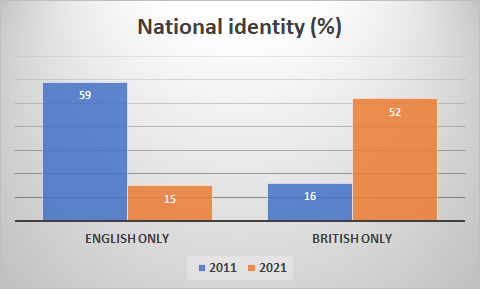
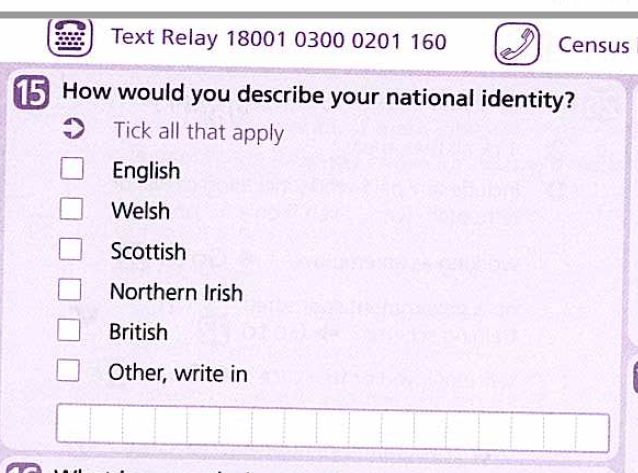
As important as the provision of a tick-box would be, even more critical is its placement. To illustrate this, we only need to look at the percentages declaring a British or English only identity in the two recent censuses.
In 2011 the first tick-box in the list provided was ‘English’; in 2021 it was ‘British’. This implies that most people in Cornwall make little distinction between British and English.


I am in the process of reading Carew’s Survey of Cornwall 1603, his ethnicity results are similar, in that the south east of Cornwall in particular was more English then, (although obviously this was not true of Newquay in 1603!) In general the areas that were more Cornish then remain more Cornish now, which I find interesting.
LikeLike
Yes, an intriguing point. Carew was of course writing before industrialisation began to gain pace in Cornwall. But the geography of copper mining in the 1700s and early 1800s mirrored the geography of the last days of the vernacular language. This lucky coincidence was probably most fortuitous in terms of strengthening a sense of modern identity.
LikeLiked by 1 person