Richard Carew’s Survey of Cornwall gives an insight into the state of Cornish towns at the end of the 1500s, when he was compiling his book. Or perhaps it would be more accurate to say it gives an insight into Carew’s opinion of Cornish towns at this time. Beginning in the east, Carew wrote that … Continue reading The state of Cornish towns in 1600: Part 1
Category: economic history
West Wheal Seton: a working mine of the 1870s
West Wheal Seton mine in 1877 West Wheal Seton was one of a number of mines around Camborne that were struggling to survive the mining depression of the 1870s. One after another, neighbouring mines were falling victim to low metal prices and their engines ceasing to pump. As a result, West Wheal Seton had almost … Continue reading West Wheal Seton: a working mine of the 1870s
Of blowing houses and tin smelters
If you wander through the highways and byways of Cornwall you may well come across the name Blowing House. Where does this come from? In former times ‘houses’ were built to smelt tin, transforming tin ore, or ‘black tin’, containing other chemical elements such as oxygen or sulphur, into purer ‘white tin’. Stannary law stated … Continue reading Of blowing houses and tin smelters
Geevor tin mine: its rise and fall
It’s almost thirty years since the pumps were turned off at Geevor at Pendeen and the mine was allowed to flood. Now the site of the one of the best museums and heritage centres in Cornwall, Geevor Tin Mines Limited came into being in 1911. The area had been mined for centuries prior to this. … Continue reading Geevor tin mine: its rise and fall
Goldsworthy Gurney, the inventor of limelight
With the recent success of the Cornish film Bait, it’s an appropriate time to remember an unwarrantably obscure Cornishman. Henry Lovell Goldsworthy Gurney was born on February 14th, 1793 at Padstow and died at Bude as Sir Goldsworthy Gurney on February 28th, 1875. Gurney’s connection with the dramatic arts is via his improvement of stage … Continue reading Goldsworthy Gurney, the inventor of limelight
Who were the richest families of late Victorian Cornwall?
In 1885 a letter appeared in the West Briton listing what were claimed to be the 27 richest men in Cornwall with their reputed incomes. Here’s the richest nine. (For a rough modern equivalent of the income multiply the figures by 120). NameHouseAnnual incomeThomas Charles Agar-RobartesLanhydrock£75,000John Charles WilliamsCaerhayes£60,000Evelyn BoscawenTregothnan£50,000Duke of Cornwall£40,000Gustavus BassetTehidy£32,000William Henry EdgcumbeMount Edgcumbe£30,000Thomas … Continue reading Who were the richest families of late Victorian Cornwall?
Agricultural depression in Cornwall
In the 1870s, farmers across Britain began to suffer from falling grain prices as imports started to flood in from the prairies of North America. As farmers struggled, demands for rent reductions mounted. Cornwall was actually one of the places where rents declined far less than average. This can be explained by the extra competition … Continue reading Agricultural depression in Cornwall
The Levant mine disaster
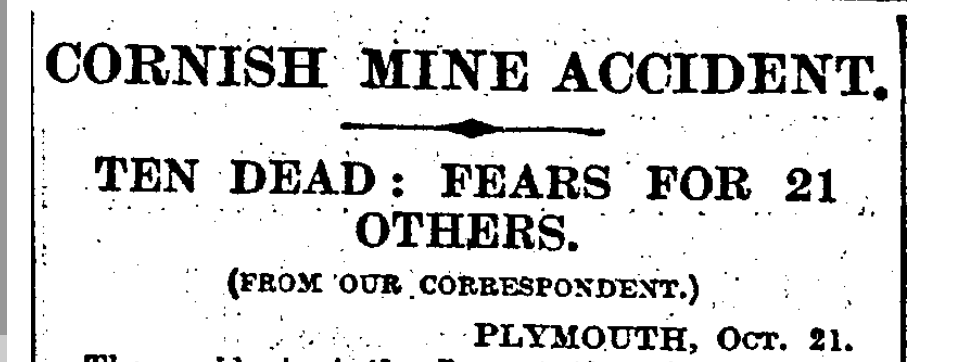
A hundred years ago today the man engine collapsed at Levant mine, Pendeen, near St Just. This was the second worse mine disaster in Cornwall’s history. Thirty-one miners lost their lives and many others were badly injured. The man engine was a device that conveyed miners to and from the surface, allowing them to avoid … Continue reading The Levant mine disaster
Three golden ages and six turning points: a history of Cornwall in 500 words
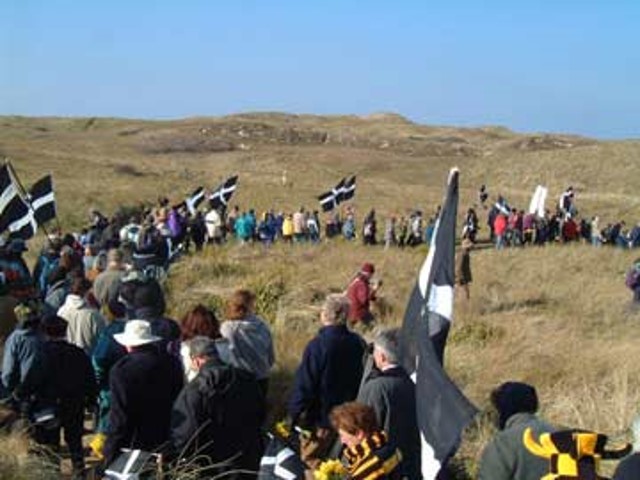
Yesterday, I was asked to give a short talk on the history of Cornwall. How do you sum up 2,000 years of history in 45 minutes? Tricky. This was my attempt. A golden age is a period of victory or defeat (or both) which later becomes mythologised and looked back on with pride. A turning … Continue reading Three golden ages and six turning points: a history of Cornwall in 500 words
Pondering on potatoes
There’s some potato harvesting going on nearby. A bit different from the 18th century however. Now heavily mechanised, then it would have been labour intensive, the fields full of people rather than a few lumbering tractors and their associated gizmos. Potato cultivation was widespread in Cornwall by the 1750s. An observer in the early 1800s … Continue reading Pondering on potatoes
 Cornish studies resources