Mary O’Sullivan, ‘Machines in the hands of capitalists: power and profit in late eighteenth-century Cornish copper mines’, Past and Present 260 (2023), pp. 71-122
In 1787 a large crowd of angry miners set off from North Downs mine near Redruth, at the time one of Cornwall’s leading copper mines. Sensationalist accounts of the time claimed they were bent on destroying the property of Truro’s middle classes. Some later historical accounts lump them in with the Luddites who smashed new machinery in the cotton and woollen textile regions. In this article, Mary O’Sullivan clarifies their intentions.
In fact, as she points out, they had a clearer grasp of what was going on than many mines adventurers did. Their protest was aimed squarely at those who controlled and financed the Cornish Metal Company (CMC), the cartel formed in 1785 that attempted, but disastrously failed, to control the price of copper. They were no Luddites; their intention was not to destroy the new Boulton and Watt steam engines that had been erected at their mine but to prevent those who owned them shutting them down.
The economic history of Cornwall in the 1770s and 80s is hardly unknown territory. The application of more efficient steam engines aided the rapid expansion of Cornwall’s copper mines but was accompanied by growing competition from Anglesey, where costs were considerably lower than the already deep Cornish mines. Disputes over the premium demanded by Boulton and Watt to operate their engines and the legality of their patent plus unpredictable fluctuations in demand peppered these decades.
What Mary O’Sullivan does here is to re-tell this story while placing it in a context that restores the profit motive to its centre. This was no simple tale of heroic capitalists introducing cost-cutting machinery to boost their profits. Instead, she explains how profits were made by reference to three inter-connected aspects of the concept of power.
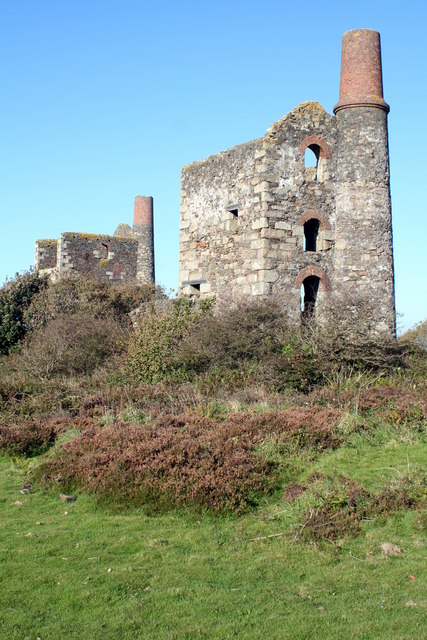
The first was the obvious mechanical power of the steam engine. But she finds that the premium demanded by Boulton and Watt, one based in the hypothetical savings on coal when compared with older Newcomen engines, involved ‘unrealistically high estimates of their engines’ cost savings’. The growing complaints and demands for abatements of the premium were more reasonable than many have assumed.
The second aspect of power was imperial power as the reach of the growing British Empire guaranteed the export of the copper and brass goods on which the fortunes of the copper mines ultimately depended. War in North America in the 1770s, the collapse of the African and West Indian markets, the decision by the Admiralty first to introduce, then to suspend, and finally to re-introduce copper sheathing of Royal Navy ships in the period from 1779 to 1783 all produced extreme market volatility. Spurts of over-optimistic engine-building were followed by abrupt price collapses, worsened by the climbing output of copper from Anglesey.
The final kind of power was market power. Previously, copper prices were dictated by the small cabal of copper smelters. The Cornish Metal Company was set up in 1785 to break their power and obtain higher prices for the mines. However, it was an ‘unmitigated disaster’, left with huge stocks of unsold copper in a falling market.
By 1787 a rift had emerged between the finance capitalists attracted to invest in the CMC and locally based mining capitalists led by Sir Francis Basset. The financiers, including Boulton and Watt, called for the closure of a third of Cornish mines to reduce output and restore price levels. The mining capitalists, more aware of the effect this would have on volatile local communities, hesitated. Their minds were eventually made up for them by the protests of the working miners and they backed away from the more drastic plans of the financiers. Nevertheless, it wasn’t enough to stave off the closure of several mines, a short-lived depression and considerable hardship in Cornish mining communities during the late 1780s.
By the 1800s Cornish copper mining had entered on an era of ‘sustained technological change’. Less dramatic than the earlier decades, this transition is less also less well understood. In her conclusion Mary O’Sullivan suggests that the history of profit may help to explain that transition too.
If you find the material on this site of use then you may be interested in my recent books published under the Coserg imprint. For a list see here.
 Cornish studies resources

A very interesting account of mining in Cornwall in the C18th showing the interplay between economic power groups, technology and the market. I visited Parys Mountain in Ynys Mon/Anglesey in 1978 – lots of remains of mining – including shafts. My fellow students were walking close to one and did not realise the danger!
LikeLike