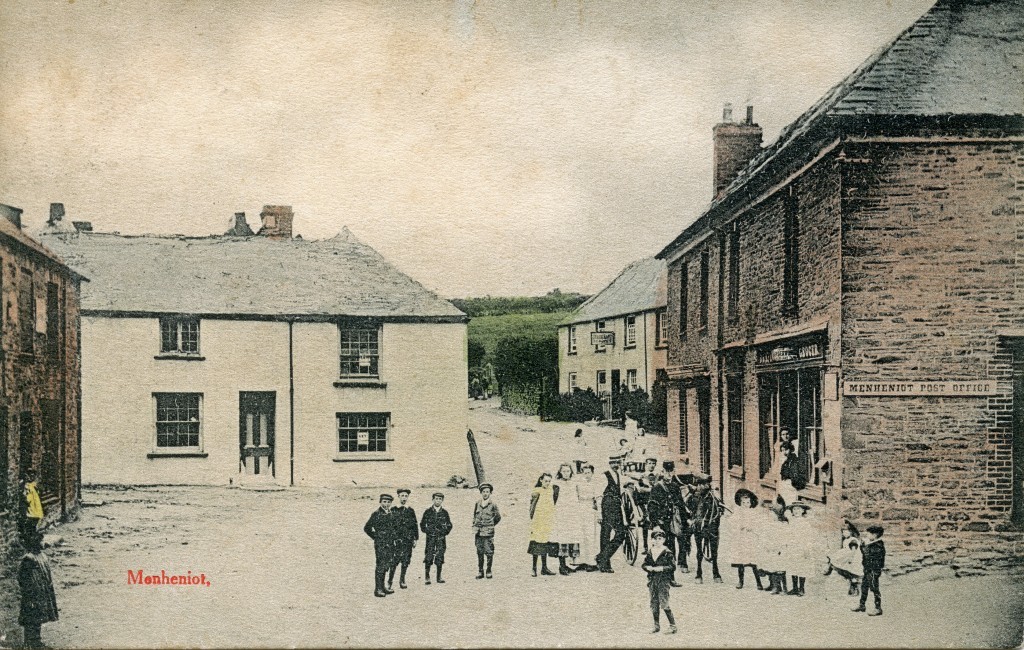
Menheniot, to the south-east of Liskeard in east Cornwall, was a boom and bust parish of the mid-Victorian period. The population soared by almost 60 per cent in the 1840s before peaking in the early 1860s. It then fell by over a half in the next 30 years. People were attracted to the parish by the lead mines that opened in the 1840s, but those same mines succumbed to a dramatic collapse of lead prices in the early 1870s so job opportunities in the parish became extremely limited to say the least.
Of the 13 Menheniot children traced from 1851 to 1891 and still alive in 1891, only one still lived in the parish. Thomas Hooper was a blacksmith in 1851. His son, also called Thomas, learnt the trade and, after marrying Jane Hancock in 1873, ran his own smithy in 1881. Then, rather unexpectedly, Thomas junior returned to his parent’s house, working as a blacksmith in his father’s concern in 1891. In the meantime, Jane was a housekeeper at the farm of John Martin at St Mellion, a few miles to the east. She was still housekeeping at St Mellion ten years later at the time of the 1891 census. Of Thomas there was no sign. Do the bare records of the census hide a domestic crisis?
Maybe Thomas had emigrated as did several of his contemporaries at Menheniot. In 1891 two were living in the States, one at Houghton on the Upper Peninsula and another in Pennsylvania; one was resident at Ontario in Canada; a fourth could be found in New South Wales in Australia.
Yet another was absent ‘abroad’ in 1891. John Richards had been born just over the parish boundary in St Germans. His father was a lead miner, himself born in Newfoundland. By the time John was 11 he had joined his father and brother working in a local lead mine. In 1872 he married Emma Hobbs and by 1881 the pair had moved to the new village of Pensilva near the South Caradon copper mine.
Ten years later Emma was back at Menheniot. The copper mines of Caradon were now also beginning to falter and John had gone abroad. His spell on the mining frontier obviously paid off as he returned in the 1890s with enough money for the couple to take on a pub in Plymouth, where they were living in 1901.
 Cornish studies resources
I often wonder if the villages photographed in the early years were tidied and swept specifically for the photograph. Is that possible? It also seems sad that tarmaced roads now rush through the quiet villages that once existed, so that these villages you are discussing are hardly a glimpse in the eye.
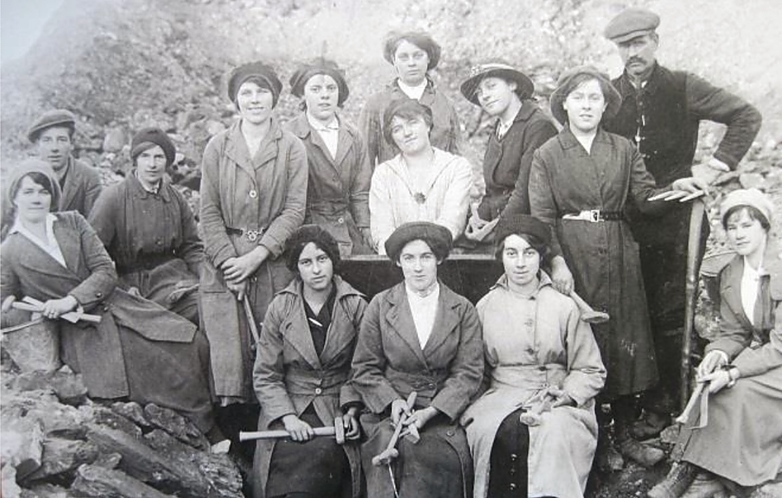
I wonder also if the women in the mining photograph were wearing their best for the photograph. They all look very bonny. The man on the right looks like a foreman – for me a reflection on gender power relations. So many women, one male boss (unless I have misinterpreted the man’s role – and I see the young man on the left, too).
LikeLike
Menheniot was pretty quiet as late as the 1960s – I remember a lady in the Alms Houses having several Spaniels who quite happily snoozed happily in the road
LikeLike
I suspect the ladies had been instructed to look their best for the photo. Fake news is not new news. Do you have any information on Doddycross one mile from Menheniot.
LikeLike
My wife’s great grandparents and many of their relatives lived in Doddycross in the decades from 1890 through to around 1920. George and Elizabeth Hare had 8 children and worked at farms in the area around Menheniot until his untimely death in the Coldrenick Railway Bridge Disaster in Febraury 1897. He died on his 2nd day at this job. They had lived in Doddycross in the 1880’s and 90’s from time to time and several of their 8 children were born there. Elizabeth moved back in 1897 from Bethany a few miles away to raise her children in Doddycross. She was born a Bartlett and her mother and father lived in Doddycross as well as two of her brothers, and one of her married daughters Fanny Babbage. In 1911, the census shows 7 of the 14 or 15 households were her relatives, Hare, Bartlett, and Babbage were their family names. We live in Belleville in Ontario but visted both Menheniot and Doddycross in 2020 and found a second cousin (a Babbage) still living in Menheniot and visited with her.
LikeLike
I have discovered that my ancestor Cresten Cocke was born at Menheniot in 1577. Her father Walter. She had changed her name to Christian Cooke when she married William Robert in 1605 of Newlyn and Paul Parish. I think that Walter had a brother William as one from Paul in a Will of Henry Cocke of Gwithian in 1617/8. Thanks for reading. Diane Penberthy Western Australia
LikeLike