
Kate Bernstock, ‘Chasing shadows: Conducting a regional black history of Falmouth and Penryn during the packet boat years of 1688 to 1850’ in Hakim Adi (ed.), Many Struggles: New Histories of African and Caribbean People in Britain, Pluto, London, 2023, pp. 43-55.
The sociologist Paul Gilroy titled his 1987 book on race and politics in the UK There ain’t no black in the Union Jack. The same cannot be said of St Piran’s flag. Kate Bernstock’s book chapter reminds us that in the past this amounted to more than just a colour contained in a national flag. The importance of the packet boats for Falmouth’s economy and the town’s ‘intimate relationship’ with the trafficking of enslaved Africans until the abolition of the slave trade (in British ships at least) in 1807 ensured an unmissable black presence in Falmouth and its vicinity.
Bernstock cites William Beckford’s description of Falmouth in 1787 as a ‘society of Barbadoes Creoles and packet- boat captains’ to reinforce a picture of a diverse town including a number of ‘enslaved, freed and free people of African descent’. Her work and that of others debunks narratives of Cornwall as a place where in the past the presence of black people was a rarity. But she goes further, by rejecting a reliance on binary narratives of either uplifted and talented individuals, such as Joseph Emidy, or more anonymous traumatised victimhood. Instead, she adopts a ‘subject-perspective study’ in attempting to construct a more holistic account.
The existing historiography has focused on free or freed people of African descent, noting the inter-racial marriages that are evident from parish registers. But in this chapter we are reminded of more marginal subjects, those who had escaped slavery, absconders and runaways or those who remained slaves usually in a domestic setting. Because of their marginal status records of this group are by their nature difficult to find. As Bernstock admits, at the moment reconstruction of their lives has to be fairly speculative.
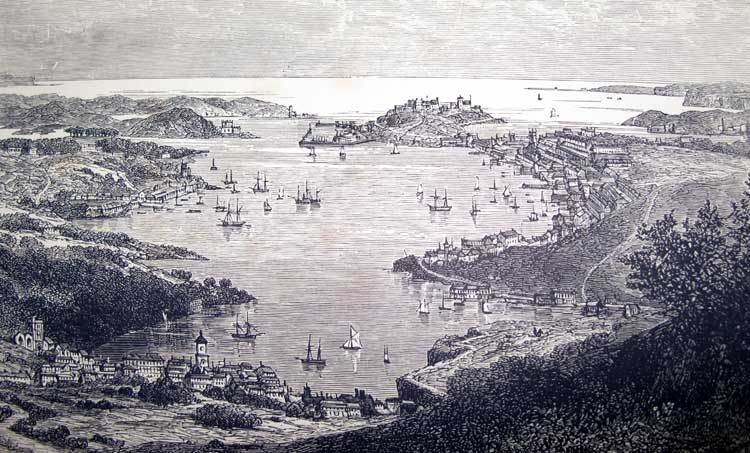
However, she convincingly muses on how black people may have responded emotionally to a town where the effects of the transatlantic slave trade in the 1700s could hardly have been missed. She wonders what attitudes those who participated in elite circles, as did Emidy, might have held towards outsiders or runaways who shared their skin colour. As she admits, there are ‘many unknowns’.
What is clearer from the evidence is that abolitionists, of whom there were several in Falmouth led by the Quaker Fox family, were not necessarily anti-racist. Moreover, the presence of people of African descent in the Falmouth district must at times have co-existed with a degree of racial tension as the occasional drunken clash between white and black sailors reported in the local press might suggest.
In conclusion, this is a useful corrective to over-simplified accounts of black people in Falmouth and Cornwall more widely. It reminds us that all groups, of whatever racial background or ethnicity, are riven by differences – of class, status, gender, age – as well as bound by common ties. What is needed now is more detailed research into the records of those investing in transatlantic slave transportation and slave ownership to identify and quantify the Cornish involvement in that trade.
If you have found the material on this site of use then you may be interested in my books published under the Coserg imprint. For a list see here.

