
Jo Buchanan, ‘Performing Cornishness: the Man Engine pilgrimage and the ritualesque’, International Journal of Heritage Studies 30.4, 2024, pp. 454-74.
Ten years after the mining landscape of parts of Cornwall was designated a World Heritage Site in 2006 the Man Engine was created and underwent its pilgrimage around Cornwall. Jo Buchanan points out here that this was not just an impressive spectacle as people flocked to glimpse the formerly underground transformed into an enormous and spell-binding overground presence. It was a lot more. The Man Engine was an example of ‘intangible cultural heritage’ and an act of community remembrance and celebration.
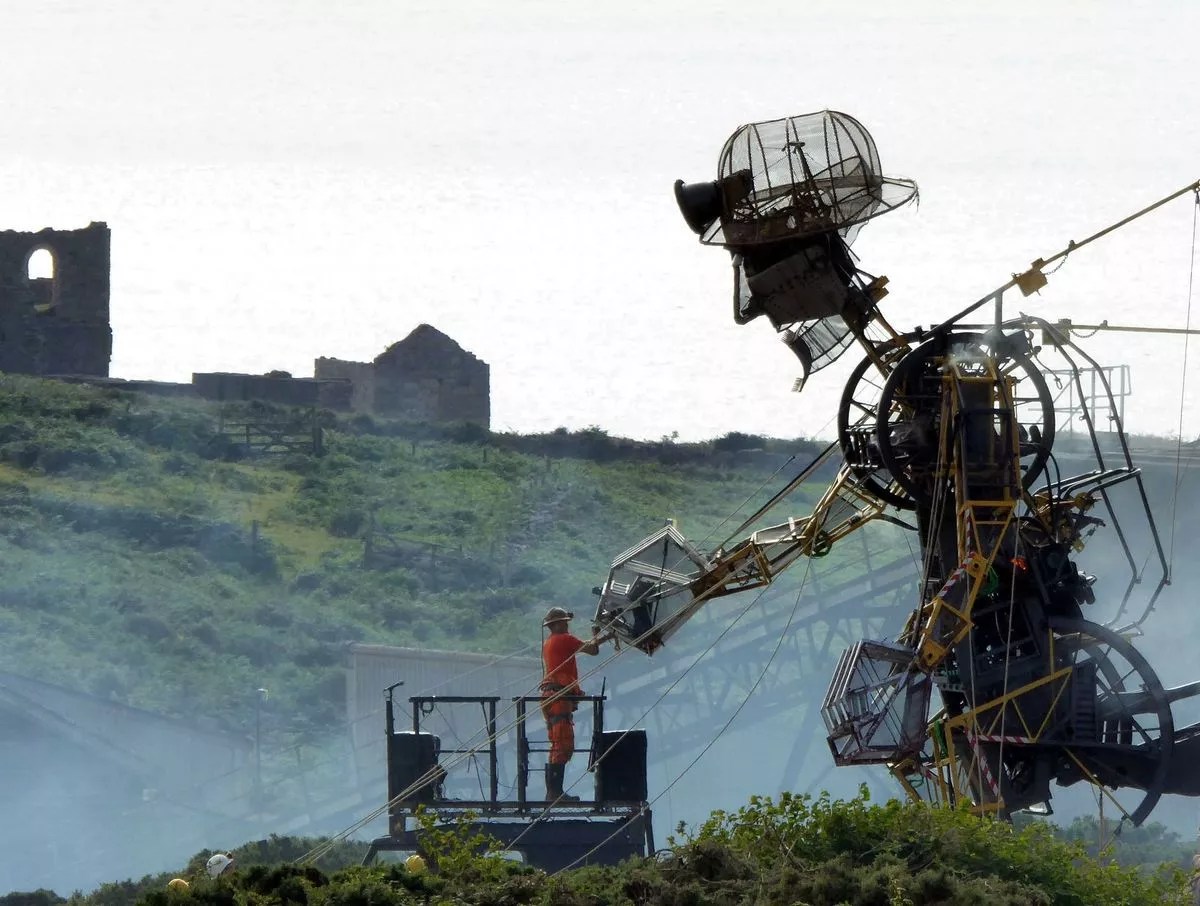
Buchanan distinguishes between two sorts of heritage. One is official and authorised, managed by professional experts, focused on tangible assets such as buildings and obsessed with outputs, regeneration and evaluation. The second is less tangible, unofficial and encompassing cultural brokers, creative practitioners and artists, local communities and their identities. The novelty of the Man Engine phenomenon was that it brought these two together. This created a ‘temporary loose unstructured space’ within which a sense of belonging could be affirmed.
In her article, Buchanan uses performance theory to understand the processes that unfolded during the Man Engine’s ponderous trek around Cornwall. For her this was a ritual in which participants’ experiences were central, empowering the marginalised to express their identity and reclaim public space. In its wake the Man Engine opened up a space to explore tensions between the official heritage industry with its emphasis on preserving, fossilising and tourism and the impacts of that approach on everyday life.
The Man Engine promoted a bottom-up (literally) innovation and creativity, something that could be owned by one and all. For a fleeting moment it inspired a renewed pride in Cornwall’s industrial past. But this was also a ‘productive nostalgia’, using the past to look to the future, or at least to a potential future.
A final aspect of the Man Engine performance was its adoption of the ritual of pilgrimage. Movement, both of the Man Engine itself and its triumphant peregrination around Cornwall, harked back to past popular culture, whether medieval pilgrimages, folk festivals or Methodist processions. Interestingly, it also echoes what has been suggested as the performance method of Cornish theatre in the round. In the plains an gwarry the audience mingled with the performers, moving around the plain as the plays progressed.
While perhaps overestimating the effect of the Man Engine in legitimating and valorising the heritage of ordinary people and underestimating the continuing power of top-down state-led processes, this article – like the Man Engine itself – provides an uplifting perspective on Cornish heritage.


Personally I could never see the attraction of this, seemed somewhat odd!!
LikeLike