
Jesse Harasta, ‘A Song for Cornwall (Kan rag Kernow): a study of musicians and translators working on Cornish/Kernewek lyrics for international song festivals’, Journal of Multilingual and Multicultural Development 45.1 (2024), pp. 72-83.
Cornish musicians have punched far above their weight in the Pan Celtic Festival’s annual International Song Competition, held in Ireland for the last half century. This has been particularly remarkable in recent years. Since 2003, while Irish groups have won the competition five times and Welsh groups four, Cornish musicians brought the prize home on no less than six occasions. This was achieved despite Cornwall being far smaller in terms of population and presumably number of performers than their larger Celtic rivals.
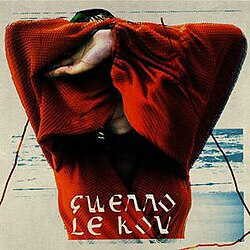
Jesse Harasta observes that the intervention of the state in the revived Cornish language played a key role in this success rate. The role of translators is important because competitors sing in their native languages. However, in the Cornish case, the majority of musicians have not been fluent Cornish speakers. In the late twentieth century they had to rely on voluntary help from Cornish speakers to translate lyrics and help with pronunciation.
Once the Cornish language began to receive limited financial support after 2003 this translation process could be formalised, with the musician-translator relationship conducted on a more professional and less personal basis. In consequence, it has ‘shifted the relationship between translators and musicians’ and ‘reconfigured the potent role of the language movement’.
Basing his research on interviews conducted at Cornwall’s 2021 Lowender festival, Harasta explores the relationship between musicians and translators. This is placed in an intriguing theoretical context of ‘ethnolinguistic infusion’. The starting point for this is recent challenges to longstanding views of minority language activists. Traditional assumptions that the goal must be reproducing a stable speech community, restoring intergenerational transmission and expanding the fluent use of the minority language are rejected. Instead, attention turns to the ‘metalinguistic community’, the wider group affiliated to the minority culture and encompassing those beyond the language movement.
The role of language activists turns from reviving their language so that it mimics the majority language to making use of it as a symbolic tool for ethnic survival, political or cultural autonomy or merely instilling community pride. This seems particularly apposite in the case of a language like Cornish which has no significant community of speakers. Elements of Cornish (song lyrics, loanwords, visual displays) can be inserted into English in order to encourage affiliation, signal distinctiveness and valorise the language and by implication Cornwall and its people in general.
The use of translators has helped non-Cornish speakers to promote Cornwall and achieve international recognition but the change from a voluntary to more professional relationship also brings its downsides. For example, it might undermine the close personal relationships that existed in a purely voluntary movement and make musicians more dependent on a small group of ‘experts’ and their management by an inherently vulnerable and exposed system of financial support.
Yet more generally, in Cornwall the advantage of the marginal position of the Cornish language is that it is potentially owned by all Cornish people, not by a group of fluent speakers (as in Wales). That gives it a wider role in identity formation while at the same time obviating the need actually to learn it. But if there is no need for people to become fluent speakers of revived Cornish, then is there any point in learning the language well enough to converse in it?

