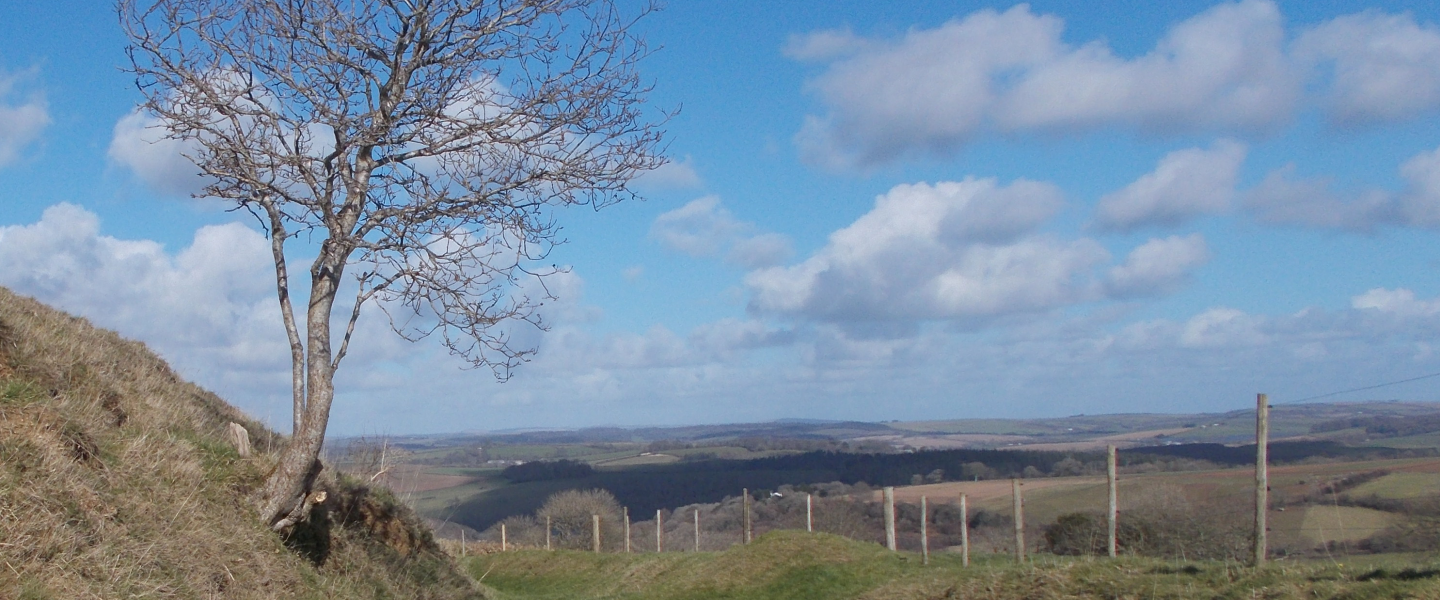
Catherine J. Frieman, ‘Local practices and global processes: Cornwall in the Bronze Age world’ in Heide W. Norgaard and Samantha S. Reiter, Bronzization: Essays in Bronze Age Archaeology, Archaeopress, 2025, pp. 28-39.
Archaeological models of Bronze Age Eurasia have noted that by 2,000 BC people in western Europe were sharing artefacts, rituals and most notably the use of bronze metal. Bronze (and metal in general) was significantly different from other resources such as wood, clay, flint or stone in that the constituent ores were only found in certain regions and had to be transported from those regions to others.
Such transport was at the heart of a proposed step change in connectivity and interaction during the Bronze Age. Archaeologists have therefore proposed networks of exchange across western Europe creating a ‘transculture’ of common cultural practices. However, within this there existed major centres or nodes of exchange. These were usually regions of ore deposits which ‘loom large’ in discussions of Bronze Age connectivity. In addition, most models of the period see emerging elites as the drivers of this exchange and connectivity.
Cornwall shared in these long-distance networks with some of the same domestic architecture, tools, ceramics and metalwork as were found in neighbouring regions. A few finds of exogenous artefacts are also evidence of participation in trade networks. Nevertheless, although there is also substantial evidence for the exploitation of copper, tin and gold in Cornwall in the Bronze Age it was not a major centre.
Cornwall was different in that these external links did not greatly impact on local cultural traditions. These were seen in pottery and the construction of rounds from around 1,500 BC while there were distinct funeral depositional practices – rarely with the single high status burials accompanied by the exogenous and rare objects that were found in other regions. This accompanied an absence of evidence for a ‘settlement hierarchy, coercive social control, or the emergence of an elite’.
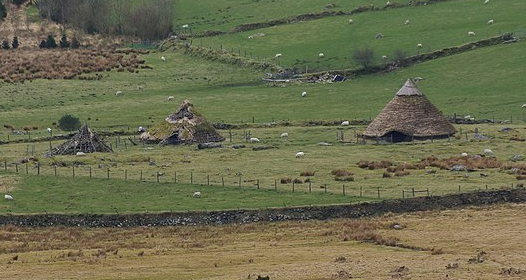
In challenging the wider model of the European Bronze Age Catherine Frieman observes that, in Cornwall the presence of significant metal working and extraction was not associated with the chieftains and political hierarchies of other mining regions. Cornwall’s metal trade was not controlled by elites. She suggests that in contrast it was managed by small settlements where life remained focused on domestic and pastoral everyday activities with metal mining and smelting being a seasonal activity.
The ‘low-control’ society that she claims to detect echoes the conclusions she and some colleagues reached in 2024 when they argued that in Cornwall the arrival of the Romans had a relatively small impact on local life.1 Moreover, this picture – of a decentralised society with limited hierarchies – might be further extended to the post-Roman period. Between the 500s and 900s there was no permanent kingship, light lordship, village and hamlet control of economic life and a dispersed ecclesiastical presence. (See my Cornwall’s First Golden Age.) All this closely resembled what we know of Brittany in the same period.
The implication that Cornish social structures had been dispersed, local and libertarian for 3,000 years from 2000 BC raises some intriguing questions. Does the arrival of the English take on more significance in breaking this long tradition? What had the precise function of Tintagel been during Cornwall’s first golden age if, as looks increasingly likely, it was not an elite centre? Can Cornwall’s libertarian social structures be traced into the later medieval period? Were such structures intimately connected with the Cornish language? As they say, more research is required.
- Aris Politopoulos et al., ‘An anarchist archaeology of equality: Pasts and futures against hierarchy’, Cambridge Archaeological Journal 34 (2024), pp. 531-45. ↩︎

